Material Handling
AluPro vs. Creform: What Actually Changes on Your Line
IPS Engineering Team
·
June 29, 2026
·
5 min read
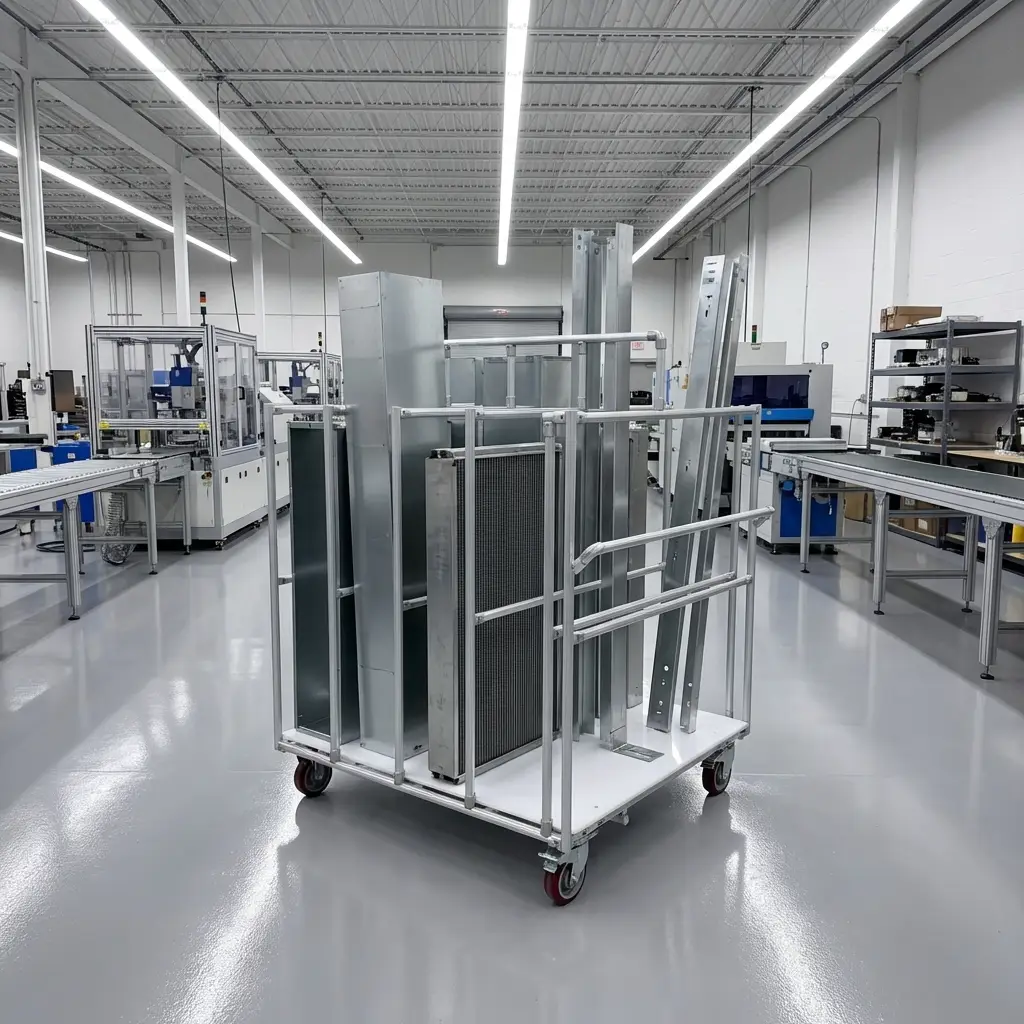
Creform and AluPro solve the same problem: build a reconfigurable, line-side structure without welding, using a modular system instead of a one-off fabrication job. Where they diverge isn't the problem they're solving, it's the physical approach, pipe-and-joint versus extruded aluminum, and that difference shows up in ways that don't always make it onto a spec sheet.
The connector is where it actually shows up first
Pipe-and-joint systems like Creform rely on clamp-style connectors: a joint tightens around a steel tube at whatever angle it's positioned to. That flexibility is part of the appeal, any angle is possible. It's also where the tradeoff lives. Getting a clamp joint to true 90 degrees, and keeping it there through vibration, load, and repositioning, depends on how carefully it was tightened and how much the connection has been handled since.
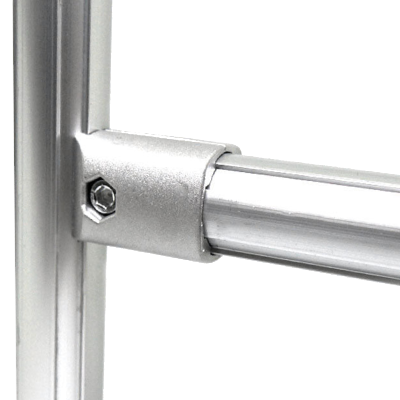
AluPro's connectors are precision-machined to lock into fixed right angles by design, not by careful tightening. The structure goes together the way it's supposed to look the first time, and it stays that way, because the geometry is built into the part, not achieved through assembly technique. For a build team assembling a rack or workstation, that's the difference between checking alignment as you go and trusting the connector to already be square.
This compounds over a system's working life, not just at initial assembly. A modular rack gets reconfigured repeatedly, a lane widened, a shelf added, a section moved to a new line entirely. Every one of those reconfigurations is a chance for a clamp joint to be retightened slightly off, or for accumulated handling to loosen a connection that was true when it was first built. A connector whose geometry is fixed by manufacture rather than by tightening technique doesn't accumulate that drift, no matter how many times the structure gets taken apart and rebuilt.
The structure goes together the way it's supposed to look the first time, because the geometry is built into the part, not achieved through assembly technique.
AluPro runs 60-70% lighter than equivalent steel pipe. On a spec sheet that reads as a performance number. On the floor, it's the difference between two people repositioning a section of a workstation and needing a lift or a third set of hands. Reconfiguration that's supposed to take minutes doesn't, if the structure itself is heavy enough to fight you.
Material matters for a second reason that's easy to overlook until it's relevant: ESD safety. Aluminum framing is inherently ESD-safe; coated steel pipe systems are more limited in this regard. For any line handling electronics, that's not a nice-to-have. ANSI/ESD S20.20, the industry-standard framework for electrostatic discharge control, is increasingly something OEMs require of their suppliers directly, not just a recommendation. A structure that's ESD-safe by material, rather than by an added coating or treatment, is one less thing to verify and maintain compliance on.
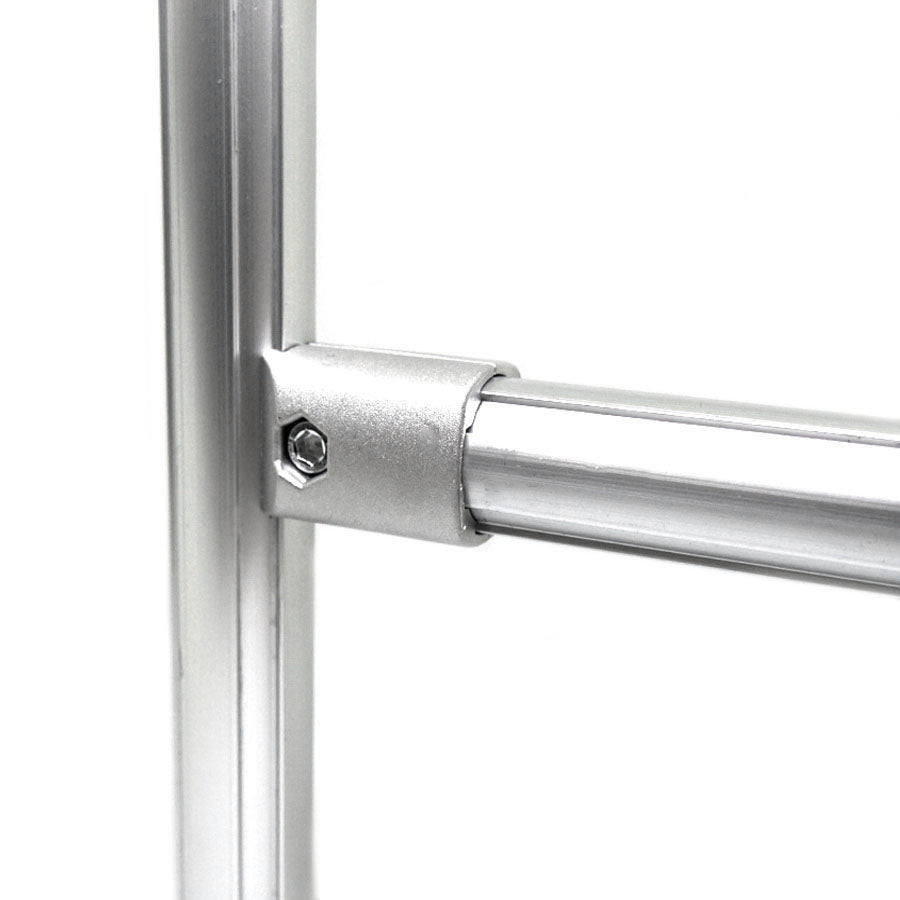
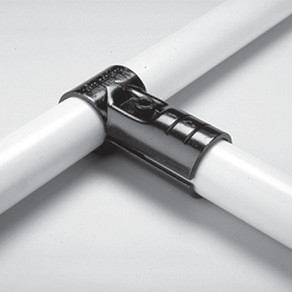
Precision-machined connectors versus clamp-style pipe joints
If ESD compliance or reconfiguration speed is part of what's driving an evaluation, see how AluPro applies across flow racks, workstations, and carts before deciding which approach actually fits your line.
Engineering support is a service model, not a line item
Both companies will help you plan a system. What differs is how long that help lasts and what it costs to keep going back for revisions. AluPro's engineering support isn't priced per revision, it's unlimited through the design process, because getting the layout right the first time matters more than billing for each iteration. That's a meaningful difference on a project where the first layout rarely survives contact with the actual line, and a second or third round of drawings is the norm, not an overage.
The practical version of this shows up mid-project, not at the quoting stage. A layout gets approved on paper, then a conveyor gets relocated, or a fixture turns out to interfere with a lane, or the line rebalances before installation. Whether that's a quick revision or a renegotiated scope depends entirely on whether the support model was built to absorb that kind of change or bill for it. Unlimited revisions isn't a marketing line if the alternative is a client hesitating to flag a problem because the fix comes with a fee attached.
Where Ecoflex fits, if you're not ready to switch systems entirely
Not every evaluation ends in switching material entirely, and that's a legitimate outcome, not a failure to close. Ecoflex is IPS's own pipe-and-joint system, built to be interchangeable with Creform components, for facilities that want the cost profile and familiarity of pipe-and-joint without committing to a full switch to aluminum framing. It's a genuine option, not a downsell dressed up as one, and it exists precisely because the connector-precision and weight arguments above don't apply the same way to every application. A lightly-used storage rack in a low-traffic area doesn't carry the same reconfiguration or ESD stakes as a line-side workstation handling electronics, and there's no reason to pay for aluminum's advantages on a structure that will rarely be touched once it's built.
The comparison, side by side
None of this makes one system universally correct. It makes the tradeoff specific: precision and speed of reconfiguration against the flexibility of a clamp-based system, weight and ESD safety against a lower material cost per foot, unlimited design iteration against a more transactional support model. Which side of that tradeoff matters more depends on what the line actually needs, not which system has the longer track record.
Talk To A Specialist
If you're actively comparing AluPro and Creform for an upcoming project, see how IPS applies AluPro across gravity flow racks, workstations, carts, and racking to find the right fit for your line.
Talk to a Lean Manufacturing Specialist →