Material Handling
Choosing Between a Modular and Fixed Workstation
IPS Engineering Team
·
July 14, 2026
·
5 min read
Modular versus fixed isn't a question with a default right answer. Both solve the same basic need, a place for an operator to work, and the right one depends on a handful of concrete things about the cell, not a general preference for flexibility or a reflex toward whichever option looks cheaper on the initial quote.
The comparison gets muddier than it needs to be because "fixed" actually covers two different things: an off-the-shelf workbench built to standard, preset dimensions, and a custom welded station built once to a specific spec and then permanently locked into that shape. Both are fixed in the sense that neither adjusts after installation, but they get there for different reasons, and they fail differently when the situation changes. In today's post, we discuss the signals that decide which workstation system is right for your facility.
01
Space constraints or specific sizing based on what you're actually storing
If a station needs to fit an exact footprint, or house bins, totes, or parts of a specific size that don't match a catalog's preset width and depth combinations, off-the-shelf options are built around standard sizing, not your actual materials. A modular system gets built to your dimensions directly.
02
Ergonomic requirements set by company policy, not just preference.
If your organization has a defined ergonomic standard, adjustable height ranges, specific reach zones, that has to be met consistently across stations, a fixed structure locks in whatever height was chosen at build time. A modular frame can be specified to meet that standard and adjusted going forward as policy or personnel change.
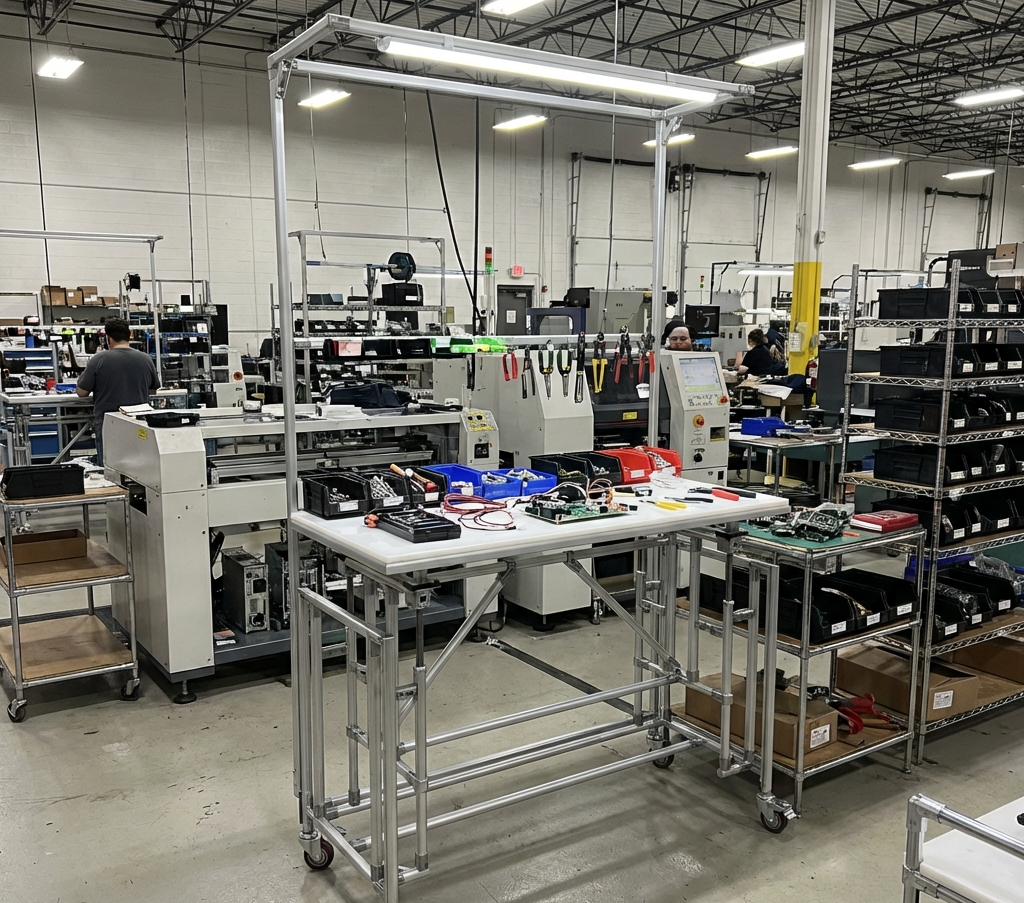
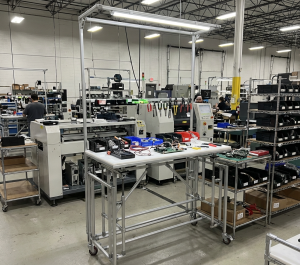
Modular AluPro workstation with height adjustment.
03
Any real chance the station gets reconfigured or reused down the line.
This is the signal most often underweighted at the time of purchase, because the need to change feels hypothetical during initial specification. A welded station requires new fabrication to modify. A modular one gets cut and reinstalled, or reconfigured with existing components, when the line changes, which happens more often over a station's working life than most initial layouts plan for.
Product mix shifts, a new hire with different reach requirements, a line rebalance that moves a task to a different point in the sequence, none of these are unusual over a station's lifespan, and each one is a fabrication project on a fixed structure and a straightforward adjustment on a modular one.
04
What the quote actually includes, not just what it costs.
A lot of off-the-shelf industrial workbenches ship as a kit, not a finished station, and someone still has to assemble it. That labor has a real cost, and it rarely shows up on the sticker price being compared against a turnkey quote. It's not a reason to distrust every off-the-shelf option, it's one more input worth factoring into the comparison alongside sizing, ergonomics, and reconfiguration, rather than comparing two numbers that aren't actually measuring the same thing.
05
Whether the station needs to function as part of a larger cell, not stand alone.
If a workstation needs to interface directly with a flow rack or cart, either built into the frame or added as an auxiliary connection, that's a structural requirement a modular system accommodates and a welded or off-the-shelf station generally can't. A cell where a flow rack feeds parts directly to the workstation, or a cart docks at it for replenishment, needs a station designed to interface with that system from the start, not one that has to be worked around after the fact because it was specified in isolation.
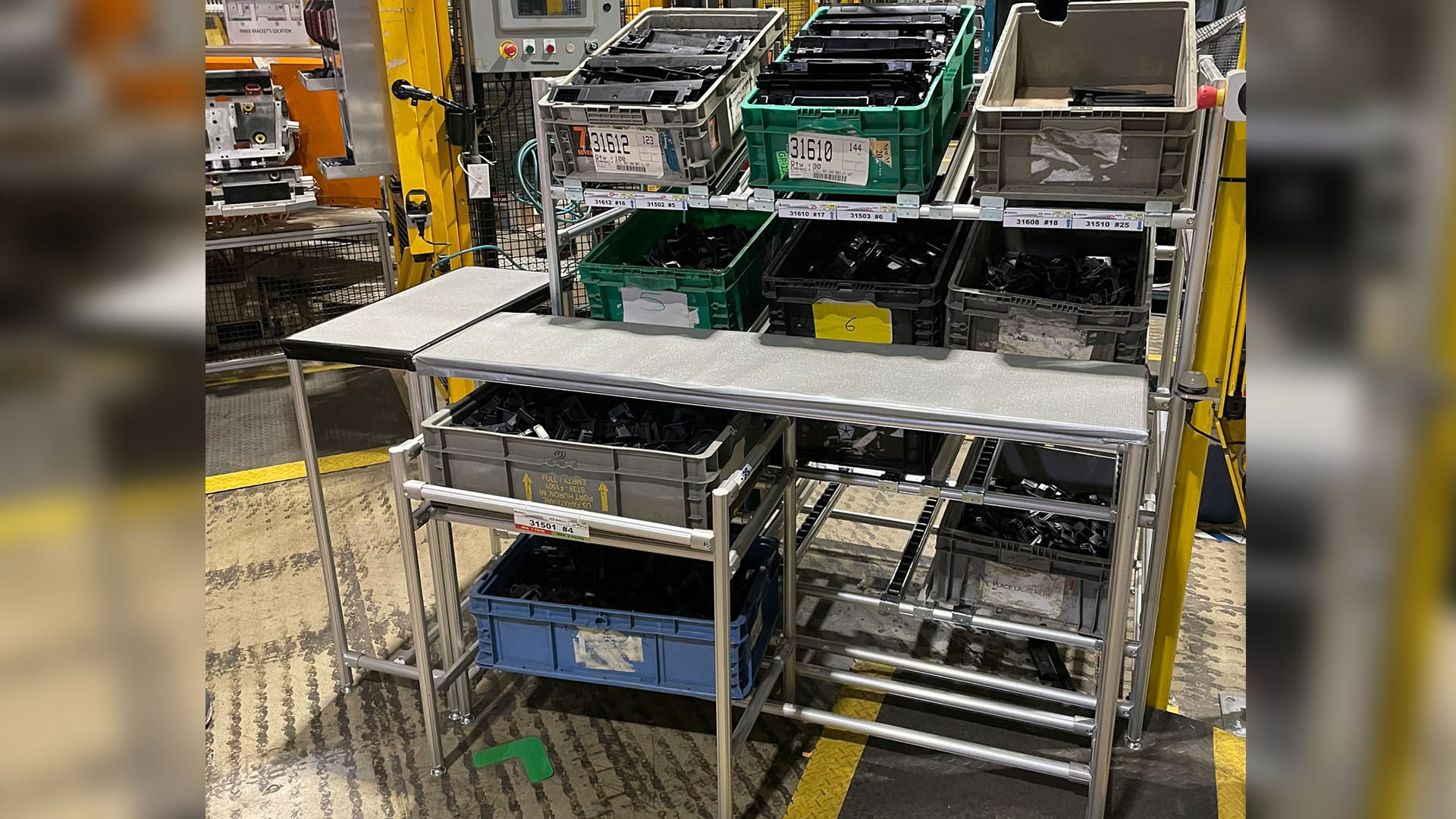
A modular system allows gravity flow racks to be fully integrated.
The right one depends on a handful of concrete things about the cell, not a general preference for flexibility.
When fixed genuinely fits
None of this means fixed is always the wrong call. A station that will never be resized, never be reassigned to a different task, and never needs to accommodate a different operator's ergonomic requirements is a legitimate case for a simpler, cheaper structure, whether that's an off-the-shelf bench or a one-off welded station. The honest version of this comparison isn't "modular always wins," it's that fixed only wins when the situation genuinely won't change, and a surprising number of stations that get specified as permanent end up needing a change within a year or two anyway.
The pattern worth watching for is how confident that "it won't change" assumption actually is at the time of purchase. A station built for a single, stable, long-running product line has a real case for fixed. A station built for a cell that's expected to see product mix changes, seasonal volume swings, or a layout review at some point in the next couple of years is a different situation entirely, even if nobody's written that future change down anywhere yet.
If you're weighing these signals against an actual cell and not sure which way they point, it's worth walking through the specifics with IPS rather than guessing from a general comparison.
What this doesn't determine
Modular systems aren't identical to each other either. AluPro's frame is ESD-safe as a standard feature; Ecoflex's is not. For an electronics or precision assembly cell, that's not a minor spec, it's the difference between a compliant station and one that needs an additional treatment to meet the same standard. Choosing modular over fixed answers one question. Which modular system fits the application is a separate one, worth getting right rather than assuming any reconfigurable frame is equivalent to any other.
This is worth naming explicitly because "modular" can start to feel like a single category once the fixed-versus-modular decision is made, and it isn't one. The right modular system still depends on what the station needs to do: whether ESD compliance matters, what work surface material the process calls for, and how much component flexibility the cell actually needs for mounts, lighting, or fixturing. Getting past the fixed-versus-modular question is the first decision, not the last one.
Talk To A Specialist
If you're weighing a fixed or off-the-shelf workstation against a modular one, see the full side-by-side comparison on the Assembly Workstations page, or talk to IPS directly about what your cell actually needs.
Talk to a Lean Manufacturing Specialist →